Restores brain function
Memory consolidation, cognitive performance and nightly clearance of brain metabolic waste via the glymphatic system.
Understanding the science behind your rest
The powerful connection between sleep, circadian rhythms, diabetes, metabolism, heart health and overall wellbeing addressed under one integrated program.
Sleep isn’t just a pillar of health — it’s the foundation. Its importance is often underestimated. Sleep is essential for the optimal functioning of every organ and cannot be replaced by supplements or sedatives.
Inside the brain is a master "body clock" that responds to natural sunlight received through the eyes. This internal timing system coordinates daily body functions over a 24-hour cycle. In addition, every organ has its own molecular clock — tiny internal timers within our cells that tell the body when to sleep, wake, digest food, release hormones and repair itself. Together these synchronized systems form our circadian rhythm.
Because of those rhythms, the body handles the same food differently at 9 AM than at 9 PM. Insulin receptor activity shifts between day and night. Timing matters as much as performance.
Why it matters
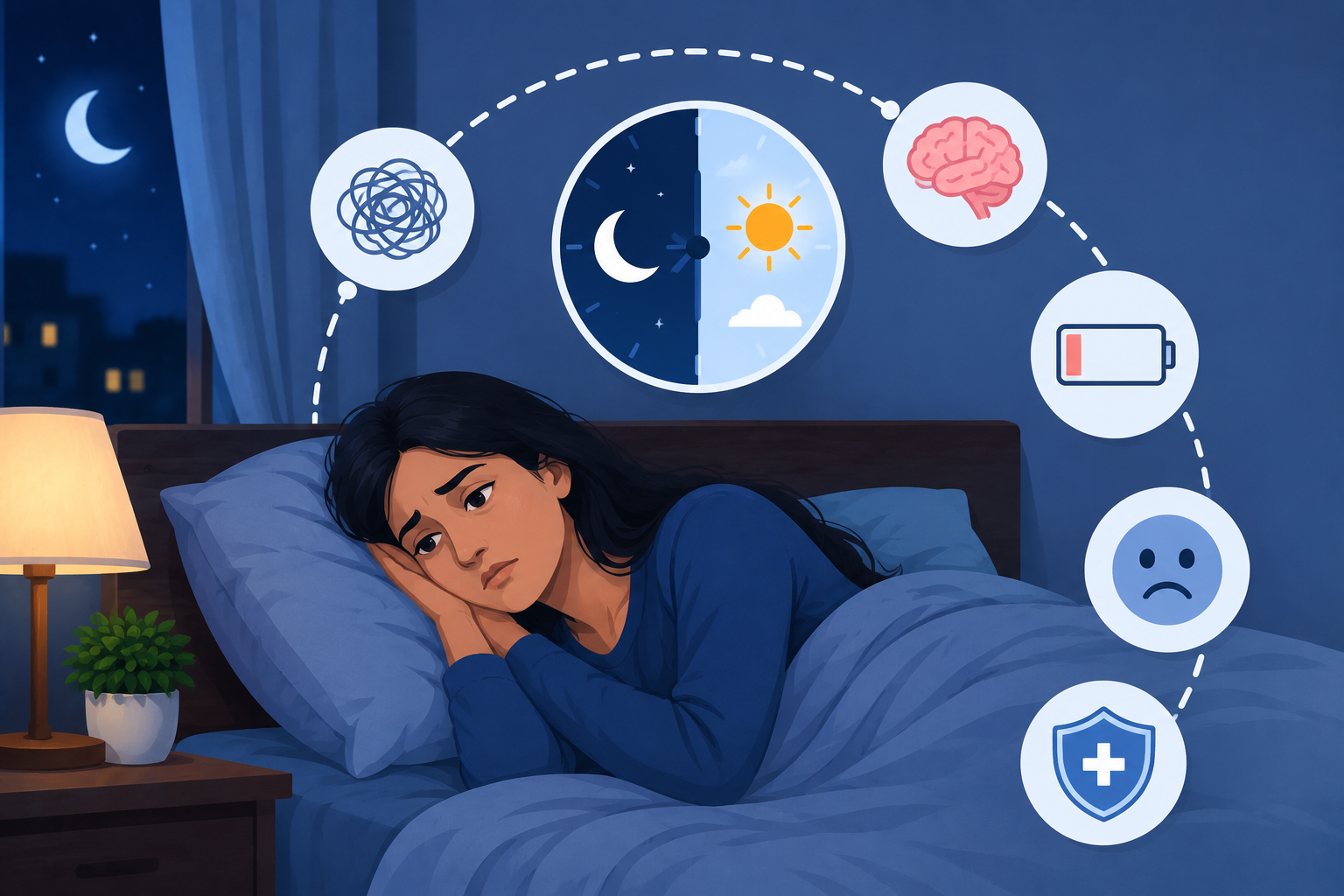
Sleep is an active biological process that restores, repairs and regulates nearly every system in your body.
Memory consolidation, cognitive performance and nightly clearance of brain metabolic waste via the glymphatic system.
Enhanced disease resistance, accelerated tissue repair and stronger innate immune defences.
Optimising metabolic health and insulin sensitivity through circadian alignment.
Night-time heart rate and blood pressure dips that protect cardiovascular function during restorative sleep.
Stress management, emotional regulation and resilience.
Cellular repair processes driven by deep slow-wave sleep that slow biological ageing and reduce chronic disease risk.
Health risks
Poor sleep & circadian disruption are directly linked to
Do you experience any of the following? A single 'yes' may indicate a sleep disorder.
Circadian science
Circadian rhythm is your body’s natural 24-hour internal clock that regulates important functions such as sleep, wakefulness, hormone release, metabolism, body temperature, and digestion. This “master clock” is located in a small part of the brain called the hypothalamus and responds mainly to natural light entering through the eyes.
Your biological clock regulates
Harmful to circadian health
The Four Major Circadian Influencers
Your body not only needs to function properly, but it also needs to perform these functions at the right time. For example, even before sunrise, the brain prepares the body to wake up by releasing hormones such as cortisol, helping you feel alert and ready for the day. At night, the body shifts into rest and repair mode to promote healthy sleep.
In addition to the brain’s master clock, every organ in the body has its own “molecular clock” that follows signals from the brain. Together, these clocks work in harmony to coordinate body functions according to the day–night cycle.
Good circadian health helps maintain healthy sleep, energy levels, metabolism, immunity, and overall well-being.
Clinical
We evaluate and manage the full spectrum of sleep and circadian disorders.
Symptoms
Potential Health Risks
Symptoms
Symptoms
Potential Health Risks
Symptoms
What we offer
Comprehensive integrated care combining sleep medicine, circadian science and metabolic health expertise.
Assessment of:
Sleep habits, Circadian health, Lifestyle, Metabolic factors
What the test measures:
Tracks brain activity, breathing patterns, oxygen levels, heart rate, and body movements, including leg activity during sleep.
Upper airway assessment for sleep-disordered breathing.
Guidance on:
Light exposure, Meal timing, Exercise timing, Sleep scheduling
Device selection, Mask fitting, Compliance support, Follow-up reviews
Psychoeducation, Cognitive restructuring, Behavioral Intervention, Coping skills and Relapse prevention
Integrated care
Sleep is a critical, often-overlooked pillar of diabetes management. Our Department works alongside diabetes specialists to deliver fully integrated care.
Patient resources
Evidence-based habits to protect and improve your sleep quality — starting tonight.
Keep a consistent sleep schedule.
Get morning sunlight.
Reduce screen exposure after sunset.
Avoid heavy late-night meals.
Exercise regularly.
Limit caffeine.
Keep the bedroom cool and dark.
Common questions
Our specialists answer the questions we hear most often.

Meet the specialist
Dr. Mahalakshmi Rangabashyam Shetty is Senior Consultant, Department of Circadian & Sleep Health, at Dr. Mohan's Diabetes Specialities Centre. She is an ENT specialist with advanced expertise in Sleep and Thyroid Surgery.
View Full ProfileBook appointment with us today!