
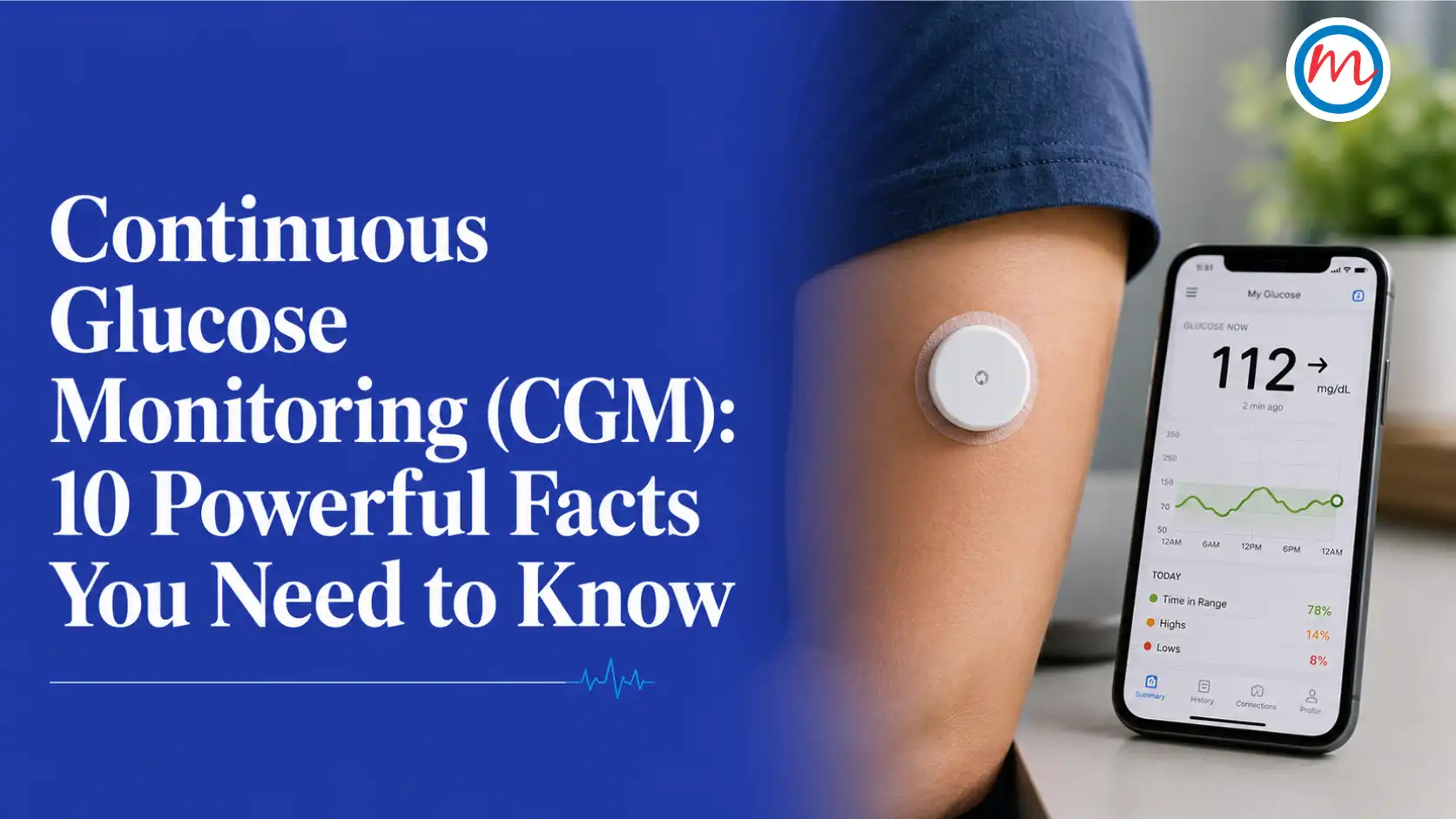
Continuous Glucose Monitoring (CGM): 10 Powerful Facts You Need to Know
Continuous Glucose Monitoring (CGM) has transformed the way people manage diabetes. Managing diabetes is no longer limited to checking your blood sugar with a finger-prick a few times a day.
Unlike traditional glucose testing, CGM provides a complete picture of how your glucose changes throughout the day and night. It reveals hidden highs and lows, and helps you understand how food, exercise, stress, sleep, and medications affect your blood sugar.
Whether you have Type 1 diabetes, Type 2 diabetes, gestational diabetes, or prediabetes, understanding Continuous Glucose Monitoring (CGM) can help you take better control of your health.
What is Continuous Glucose Monitoring (CGM)?
Continuous Glucose Monitoring (CGM) is a technology that measures glucose levels continuously throughout the day and night using a small sensor placed just under the skin.
Instead of giving only a single blood sugar reading like a glucometer, a CGM records glucose values every few minutes, providing up to 288 readings every day.
This allows you and your healthcare team to identify trends, patterns, and fluctuations that would otherwise go unnoticed.
1. CGM Shows Trends, Not Just Numbers
A finger-prick test tells you your blood sugar at one specific moment.
CGM goes a step further by showing:
- Whether your glucose is rising, falling, or staying stable
- How quickly glucose changes
- Overnight glucose patterns
- The effect of meals
- The impact of exercise
- Blood sugar changes during stress or illness
Understanding these trends helps you make smarter decisions rather than reacting to individual readings.
2. CGM Can Detect Dangerous Highs and Lows
Many people experience episodes of low blood sugar (hypoglycemia) without realizing it, especially during sleep.
CGM devices can alert users when glucose levels become too high or too low, allowing timely action before symptoms become severe.
Early warnings can reduce the risk of:
- Severe hypoglycemia
- Loss of consciousness
- Diabetes emergencies
- Hospital admissions
3. Time in Range (TIR) Is Becoming More Important Than HbA1c Alone
For many years, HbA1c has been the standard measure of long-term glucose control. While it remains important, CGM introduces another valuable metric called Time in Range (TIR).
Time in Range refers to the percentage of time your glucose remains within your target range, typically 70–180 mg/dL for many adults with diabetes (individual targets may vary).
Research shows that increasing Time in Range is associated with a lower risk of diabetes-related complications, according to the American Diabetes Association. Your doctor will help determine the target range that is appropriate for you.
4. You Learn How Food Really Affects Your Blood Sugar
Many people assume all healthy foods affect blood sugar the same way. In reality, glucose responses vary from person to person.
With CGM, you can observe how different foods influence your glucose levels, including:
- White rice
- Millets
- Fruits
- Bread
- Sugary drinks
- Protein-rich meals
- High-fiber foods
This insight helps you make personalized dietary choices rather than relying on guesswork. Explore our diabetes diet and nutrition guide for more.
5. Exercise Can Lower or Raise Glucose Levels
Physical activity is one of the best ways to improve diabetes control, but different types of exercise can affect glucose differently.
For example:
- Walking after meals may reduce glucose spikes.
- Strength training may have different effects depending on intensity.
- High-intensity exercise may temporarily increase glucose in some individuals.
- Long-duration exercise may increase the risk of hypoglycemia.
CGM allows you to monitor these responses and work with your healthcare team to adjust your exercise plan if needed.
6. CGM Helps Doctors Personalize Treatment
Instead of relying on occasional glucose readings, doctors can review comprehensive glucose reports generated by CGM.
These reports may reveal:
- Morning glucose rises
- Frequent nighttime lows
- Meal-related spikes
- Medication timing issues
- Patterns linked to daily routines
This detailed information helps healthcare professionals make more informed decisions about medications, nutrition, and lifestyle recommendations.
7. CGM Is Beneficial for More Than Type 1 Diabetes
Although CGM has long been used in Type 1 diabetes, it is increasingly beneficial for many other groups, including:
- People with Type 2 diabetes using insulin
- Individuals taking medications that may cause hypoglycemia
- People with difficult-to-control diabetes
- Pregnant women with diabetes (when recommended by their healthcare provider)
- Selected individuals with prediabetes who require closer monitoring
Your diabetes specialist can advise whether CGM is appropriate for your condition.
8. Accuracy Has Improved Significantly
Modern CGM devices are highly accurate and reliable.
Some systems may occasionally require confirmation with a finger-prick blood glucose test, particularly if:
- Symptoms do not match the CGM reading
- Glucose is changing rapidly
- The sensor has recently been inserted
- The device indicates that confirmation is needed
Following the manufacturer’s instructions and your healthcare provider’s advice will help ensure the best performance.
9. CGM Encourages Better Diabetes Self-Management
Seeing your glucose levels in real time often motivates healthier daily choices.
Many people report that CGM encourages them to:
- Eat balanced meals
- Be more physically active
- Take medications consistently
- Improve sleep habits
- Manage stress more effectively
- Understand how lifestyle choices affect glucose
This immediate feedback can make diabetes management more engaging and personalized.
10. CGM Is Part of the Future of Diabetes Care
Continuous Glucose Monitoring is increasingly being integrated with other digital health technologies, including:
- Artificial Intelligence (AI)
- Smart insulin pens
- Insulin pumps
- Mobile health applications
- Telemedicine
- Smartwatches and wearable devices
As diabetes care becomes more data-driven, CGM is expected to play an even greater role in supporting personalized treatment and preventive care.
Common Myths About CGM
Myth: CGM replaces doctor visits.
Fact: CGM is a tool that supports diabetes management. Regular consultations with your healthcare team remain essential.
Myth: CGM eliminates the need for HbA1c testing.
Fact: HbA1c and CGM provide different but complementary information. Both are valuable for diabetes care.
Myth: CGM is only for people with severe diabetes.
Fact: Many people with Type 2 diabetes and other forms of diabetes can also benefit from CGM, depending on their individual needs.
Myth: Wearing a CGM sensor is painful.
Fact: Most users describe sensor insertion as quick and only mildly uncomfortable.
Frequently Asked Questions
How often does a CGM measure glucose?
Most CGM systems measure glucose every few minutes, providing up to 288 readings per day.
Is CGM better than a glucometer?
CGM and glucometers each have important roles. While a glucometer provides single-point measurements, CGM offers continuous data, trends, and alerts. Your healthcare provider will recommend the most suitable option for your needs.
Can CGM prevent diabetes complications?
CGM itself does not prevent complications, but by helping people achieve better glucose control and identify patterns, it can support strategies that reduce the risk of long-term complications.
Who should consider using CGM?
People with Type 1 diabetes, insulin-treated Type 2 diabetes, recurrent hypoglycemia, fluctuating glucose levels, pregnancy complicated by diabetes, and others may benefit. A diabetes specialist can determine if CGM is appropriate for you.
Continuous Glucose Monitoring (CGM) is changing the way diabetes is managed. Rather than relying on isolated blood sugar readings, CGM provides a complete picture of glucose trends throughout the day and night.
This helps people understand how food, exercise, medications, stress, and sleep influence their blood sugar, enabling more informed decisions and better long-term diabetes management.
When used alongside expert medical guidance, healthy lifestyle choices, and regular follow-up, CGM can be a valuable tool in achieving improved glucose control and reducing the risk of complications.
Experience Advanced Diabetes Technology at Dr. Mohan’s Diabetes Specialities Centre
At Dr. Mohan’s Diabetes Specialities Centre, we are committed to bringing the latest advances in diabetes care to our patients. Our specialists use Continuous Glucose Monitoring (CGM) to gain deeper insights into blood sugar patterns and develop personalized treatment plans based on each patient’s unique needs.
We also leverage Artificial Intelligence (AI) to support diabetes risk assessment and provide an AI-powered patient chatbot that offers reliable guidance and answers to common diabetes-related questions.
Whether you are newly diagnosed, struggling with fluctuating blood sugar levels, or looking to optimize your diabetes management, our multidisciplinary team is here to help.
Book your appointment today at Dr. Mohan’s Diabetes Specialities Centre and discover how advanced technologies like CGM and AI can support your journey toward better diabetes control and a healthier future.